At a glance
- Commander: Soul of Windgrace
- Colors: Jund
- Archetype: Jund lands-matter / landfall midrange
- Power tier: mid
Cards
The Commander (real printed text)
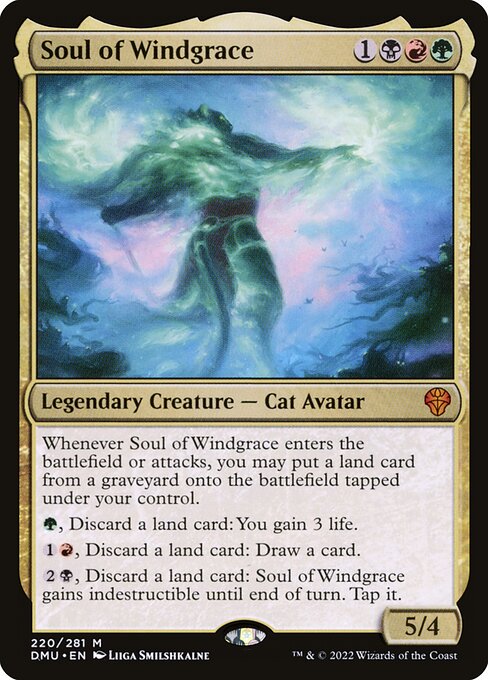
Whenever Soul of Windgrace enters or attacks, you may put a land card from a graveyard onto the battlefield tapped under your control. , Discard a land card: You gain 3 life. , Discard a land card: Draw a card. , Discard a land card: Soul of Windgrace gains indestructible until end of turn. Tap it.
Discrepancy note: the scout paraphrase said Soul “replays a land whenever it enters or attacks, and can sacrifice itself for value.” The printed card does NOT sacrifice itself — instead it has three discard-a-land activated abilities (gain 3 life / draw / indestructible) on top of the ETB-or-attack land recursion. So the engine is really two-sided: (1) reanimate lands from any graveyard onto the battlefield, and (2) turn surplus lands in hand into life, cards, and protection. The build is tuned around feeding both halves — keep a steady stream of lands flowing into the graveyard so the ETB/attack trigger always has a target, and keep enough lands in hand that the discard abilities stay online.
Gameplan
A grindy Jund midrange deck that uses lands as a renewable resource. We self-mill and over-ramp to stuff lands into the graveyard, then Soul of Windgrace (and a pack of common recursion creatures) keep replaying them. Each replayed/extra land triggers landfall payoffs, so the board snowballs while the commander refuels. We don’t durdle to a wrath we don’t have — we out-attrition the table and close with landfall beaters and token swarms.
Key synergy lines
- Soul recursion loop: Soul’s ETB/attack puts a land from any graveyard onto the battlefield tapped — that’s a free landfall trigger every combat, and it works off opponents’ graveyards too. Attack, drop a land, pump the team.
- Graveyard fuel: Grapple with the Past, Glowspore Shaman, Eccentric Farmer, and Drown in Filth self-mill to load lands into the bin; Fork in the Road literally buries a basic for later. That keeps Soul’s trigger and the discard abilities fed.
- Land-as-engine recursion: Scaretiller (return a land from GY to the battlefield every time it taps), Groundskeeper, Stoic Builder, Cartographer, Tilling Treefolk, Grim Discovery, and Harvest Wurm rebuy lands so we never run dry — every rebuy is another landfall.
- Extra land drops: Harrow, Explore, and Khalni Heart Expedition give multiple landfall triggers per turn; Stone-Seeder Hierophant untaps on each landfall (and untaps a land) for explosive mana.
- Landfall payoffs / inevitability: Spitfire Lagac and Cosi’s Ravager turn every land drop into reach damage; Sporemound and Elfsworn Giant make a token per landfall; Akoum Hellhound, Snapping Gnarlid, Plated Geopede, Makindi Sliderunner, Valakut Predator, Territorial Scythecat, and Territorial Baloth become huge attackers as lands hit.
Role breakdown (with honest counts)
- Lands: 37 — high end for three colors. Heavy fixing (see below).
- Ramp / fixing: 13 — Sakura-Tribe Elder, Rampant Growth, Farseek, Cultivate, Kodama’s Reach, Springbloom Druid, Wood Elves, Wayfarer’s Bauble, Harrow, Map the Wastes, Fork in the Road, Arcane Signet, Mind Stone. Most fetch basics (graveyard fuel + color fixing).
- Card advantage: 10 — Sign in Blood, Read the Bones, Night’s Whisper, Deadly Dispute, Costly Plunder, Big Score, Prophetic Prism, Reckless Impulse, Explore, Commander’s Sphere. (Soul’s discard-draw is bonus repeatable draw on top.)
- Spot removal / interaction: 10 — Bone Splinters, Spark Harvest, Feed the Swarm, Reave Soul, Terminate, Abrade, Flame Slash, Murder, Hull Breach, Burst Lightning.
- Mass / pseudo-wipe: 0 — there is no common BRG board wipe in the pool. Compensation: a deep 10-piece removal suite plus the landfall-token / recursive-value inevitability plan (Sporemound, Elfsworn Giant, Spitfire Lagac grinding opponents out).
- Payoffs / enablers: ~29 — landfall beaters, token makers, self-mill, and land-recursion creatures that execute the archetype.
Manabase / fixing note
37 lands: 11 basics + Command Tower / Path of Ancestry / Rupture Spire / Transguild Promenade / Crumbling Vestige / Shimmering Grotto (any-color), all three guildgates (Rakdos/Golgari/Gruul) plus dual taplands (Bloodfell Caves, Jungle Hollow, Rugged Highlands, Cinder Barrens, Foul Orchard, Timber Gorge, Bog Wreckage), three fetchlands (Evolving Wilds, Terramorphic Expanse, Jund Panorama) and Ash Barrens/Terminal Moraine. With the 13 ramp pieces (most fetching basics) that’s ~25+ fixing sources — no common Jund tri-land exists, so we go wide on gates, duals, and green fetch-ramp.
Pilot notes
- Lead on ramp/self-mill; you want lands in the graveyard before you cast Soul so the first ETB trigger pays off immediately.
- Hold a land or two in hand when Soul is out — discard-draws and discard-indestructible are how you protect the commander through removal and refill your hand.
- Attack with Soul even into bad boards; the attack trigger drops a land and fuels landfall whether or not it connects.
- Sequence land drops in your second main when you have an unattacked landfall board, but in your first main when Territorial Scythecat / Stone-Seeder Hierophant / token-makers want the trigger pre-combat.
- Scaretiller + a tapper or repeated attacks is your best grind engine; Soul’s reanimation off opponents’ graveyards is great mana denial against their own recursion.
Weaknesses
- No sweeper. Wide aggressive boards can race us; we rely on spot removal and chump-able tokens.
- Commander-reliant landfall. If Soul is repeatedly answered, our biggest landfall engine slows (mitigated by the indestructible ability and Scaretiller/expedition redundancy).
- Flyers. Most of our beef is ground-bound (Elfsworn Giant has reach; Jaddi Offshoot walls; Plummet-style answers are thin).
- Slow starts if we draw payoffs without ramp/mill to enable them.
Decklist
⬇ Download as .txt — paste into Moxfield, Archidekt, or MTG Arena.
Show the full list (99 + commander)
Commander
1 Soul of Windgrace

Deck
1 Sakura-Tribe Elder
1 Rampant Growth
1 Farseek
1 Cultivate
1 Kodama's Reach
1 Springbloom Druid
1 Wood Elves
1 Wayfarer's Bauble
1 Harrow
1 Map the Wastes
1 Fork in the Road
1 Explore
1 Harvest Wurm
1 Scaretiller
1 Arcane Signet
1 Commander's Sphere
1 Manalith
1 Grapple with the Past
1 Glowspore Shaman
1 Eccentric Farmer
1 Stoic Builder
1 Cartographer
1 Tilling Treefolk
1 Groundskeeper
1 Grim Discovery
1 Drown in Filth
1 Sign in Blood
1 Read the Bones
1 Night's Whisper
1 Deadly Dispute
1 Costly Plunder
1 Big Score
1 Prophetic Prism
1 Mind Stone
1 Reckless Impulse
1 Bone Splinters
1 Spark Harvest
1 Feed the Swarm
1 Reave Soul
1 Terminate
1 Abrade
1 Flame Slash
1 Murder
1 Hull Breach
1 Burst Lightning
1 Jaddi Offshoot
1 Akoum Hellhound
1 Snapping Gnarlid
1 Plated Geopede
1 Makindi Sliderunner
1 Valakut Predator
1 Territorial Scythecat
1 Grazing Gladehart
1 Spitfire Lagac
1 Cosi's Ravager
1 Stone-Seeder Hierophant
1 Foe-liage
1 Territorial Baloth
1 Sporemound
1 Elfsworn Giant
1 Khalni Heart Expedition
1 Zektar Shrine Expedition
1 Evolving Wilds
1 Terramorphic Expanse
1 Ash Barrens
1 Terminal Moraine
1 Command Tower
1 Path of Ancestry
1 Rupture Spire
1 Transguild Promenade
1 Crumbling Vestige
1 Shimmering Grotto
1 Rakdos Guildgate
1 Golgari Guildgate
1 Gruul Guildgate
1 Bloodfell Caves
1 Jungle Hollow
1 Rugged Highlands
1 Cinder Barrens
1 Foul Orchard
1 Timber Gorge
1 Bog Wreckage
1 Jund Panorama
1 Bojuka Bog
1 Desert of the Fervent
1 Desert of the Glorified
1 Desert of the Indomitable
1 Barren Moor
5 Forest
3 Swamp
3 Mountain