At a glance
- Commander: Shattergang Brothers
- Colors: Jund
- Archetype: Jund symmetric sacrifice edict control (stax)
- Power tier: mid-high
Cards
The real commander (printed oracle text)
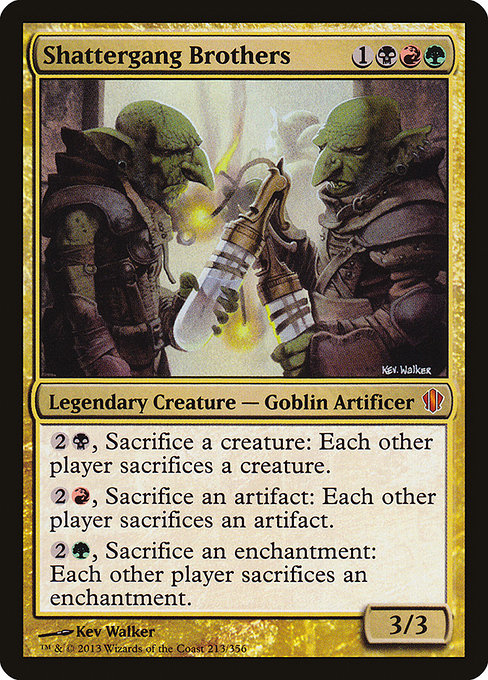
, Sacrifice a creature: Each other player sacrifices a creature. , Sacrifice an artifact: Each other player sacrifices an artifact. , Sacrifice an enchantment: Each other player sacrifices an enchantment.
This matches the scout’s paraphrase: three repeatable, mana-cheap symmetric edicts. The catch the assignment glosses over is that each ability costs you a permanent of the same type first — so the whole deck is built to have cheap, ideally recurring fodder you’re happy to feed, while opponents bleed real cards. The creature edict is the one you’ll fire every turn; the artifact and enchantment edicts are situational rattlesnakes (point them at a problem Treasure-pile or a Rhystic Study/Pestilence on the wrong side of the table). Commander confirmed against printed text.
Gameplan
Grind the table to zero permanents while you keep refilling. The loop:
- Land Shattergang plus a recurring fodder source (Persistent Specimen returns for ; Sprout Swarm with buyback makes a Saproling every turn; Cauldron Familiar loops with Food/death; Putrid Goblin persists).
- Each turn, pay + sac a token/recursive body → every opponent sacrifices a creature. You lose a 1/1; they lose their best non-hexproof creature (they choose, but in a grind that’s still a real card).
- Back it up with hard edict bodies (Fleshbag Marauder, Demon’s Disciple, Abyssal Gatekeeper, Innocent Blood) so the attrition lands even before Shattergang is online or after he eats removal.
- Convert the dying fodder into cards (Village Rites, Costly Plunder, Deadly Dispute, Corrupted Conviction) so you out-card the table while it shrinks.
- Close with inevitability (below).
This is control-by-attrition, not draw-go. You’re always doing something on every turn cycle, and the symmetric tax only hurts the people who overcommit — which, in a four-player pod, is everyone but you.
Win condition (explicit)
Pestilence inevitability + aristocrat drain. Once the board is stripped to your tokens, Pestilence (: each creature and player loses 1 life`) becomes a one-sided repeatable wrath and a direct life-loss clock you fuel with your remaining mana. Alongside it, Falkenrath Noble and Marauding Blight-Priest turn every sacrifice/lifegain into table-wide drain, Blood Aspirant pings on each sac, and Cackling Imp (: target player loses 1 life) and Vithian Stinger chip in reach. The plan: edict the board flat, then drain/ping the table out while no one can keep a blocker alive. Falkenrath Noble (flyer that drains on any death) doubles as the evasive recurring threat. Because Pestilence can fall off if you have no creature out, the real backbone is the Noble / Blight-Priest / Cackling Imp drain triangle plus Blood Aspirant — these keep ticking the table down independent of Pestilence surviving exile.
Role breakdown (actual counts in the 99)
- Lands — 37. High end for three colors. See manabase note.
- Ramp / fixing — 10: Wayfarer’s Bauble, Mind Stone, Prophetic Prism, Commander’s Sphere (rocks, most fixing), Sakura-Tribe Elder, Springbloom Druid, Llanowar Visionary (ramp creatures, several double as fodder), Cultivate, Kodama’s Reach, Farseek (green land ramp). Trimmed from 14 — Manalith, Bonder’s Ornament, Sylvan Ranger, and Wood Elves were cut as redundant fixing given 37 lands.
- Card advantage — 10: Village Rites, Costly Plunder, Corrupted Conviction, Deadly Dispute (sac-fueled draw), Dusk Legion Zealot (draw-on-ETB body that doubles as edict fodder), Ecstatic Awakener (repeatable sac-to-draw outlet), Syphon Mind (each opponent discards, you draw one per card), Night’s Whisper, Sign in Blood, Read the Bones.
- Spot removal / interaction — 16: Bone Splinters, Feed the Swarm, Terminate, Doom Blade, Cast Down, Eyeblight’s Ending, Tragic Slip, Disfigure, Flame Slash, Lightning Bolt, Searing Spear, Abrade, Magma Jet, Naturalize, Return to Nature, Caustic Caterpillar.
- True wipe — 1: Pestilence (the only repeatable, board-clearing wrath; it self-sacrifices at end step if you have no creature on the battlefield, so keep a recursive token out). At common in BRG this is realistically the only true sweeper — Crypt Rats and similar X-pingers are not common, so don’t expect a second hard wipe.
- Pseudo-wipe / symmetric edicts — 4: Fleshbag Marauder, Demon’s Disciple, Abyssal Gatekeeper, Innocent Blood. These each strip one creature per opponent (their choice), so against single-big-threat / voltron tables they’re spot removal at best, not board control. Counted separately and honestly: they support the attrition plan but are not wraths.
- Fodder / sac engine / payoffs (rest): Persistent Specimen, Putrid Goblin, Cauldron Familiar, Doomed Dissenter, Tukatongue Thallid, Mogg War Marshal, Goblin Instigator, Krenko’s Command, Dragon Fodder, Hordeling Outburst, Saproling Migration, Sprout Swarm, Thallid (fodder); Carrion Feeder, Viscera Seer (free sac outlets / scry); Blood Aspirant, Mortician Beetle (sac payoffs); Falkenrath Noble, Marauding Blight-Priest, Cackling Imp, Vithian Stinger (drain/reach finish).
Key synergy lines
- Shattergang + Persistent Specimen: to return Specimen, then sac it to the edict — every opponent loses a creature for 5 mana with no card loss to you. Repeatable each turn.
- Sprout Swarm (buyback) → free token every turn = permanent edict ammo. Convoke makes it nearly free once you have a board.
- Edict the board flat, then Pestilence with your tokens immune-by-virtue-of-recursion (Specimen/Putrid Goblin come back) while opponents have nothing.
- Sac a creature to the edict with Falkenrath Noble out = opponents lose two (the edict sac + the Noble drain).
- Free sac outlets (Carrion Feeder/Viscera Seer) let you respond to targeted removal by sacking the creature to a draw/value spell first (Village Rites in response).
Manabase / fixing note
37 lands + 4 mana rocks + 3 green land-ramp spells + 3 ramp creatures = ~17 fixing sources. The backbone is Command Tower, all three guildgates, three karoo bounce-lands, color-choice Gates (Black Dragon/Cliff/Manor), five enters-tapped duals across every Jund pair, and four fetch-lands (Evolving Wilds, Terramorphic, Jund Panorama, Ash Barrens) that find the right basic — Farseek/Cultivate/Kodama’s Reach grab duals/basics to fix the off-color pips.
Pilot notes
- Lead with fodder + ramp; you want Shattergang resolving turn 4-5 onto an already-recurring fodder source so the edict comes online immediately.
- The artifact and enchantment edicts are reactive — don’t sac your own rocks/Pestilence frivolously. Hold them for a Treasure-flooded ramp player or an oppressive enchantment.
- Sequence Pestilence carefully: keep a creature on the battlefield while it’s out or it falls off; your recursive tokens are perfect for this.
- Against go-wide tokens, lean on Pestilence + the edicts together; against single-big-threat decks, the edict is weaker (they only have one creature) so prioritize spot removal and burn.
Weaknesses
- Single-threat / voltron decks dodge symmetric edicts (they sac their only, worst creature).
- No true counterspells at common — you’re reactive via removal, so a fast combo can race you.
- Pestilence is the only true repeatable wipe (no second hard sweeper exists at common in Jund); if it’s exiled you fall back to edicts + the Noble/Blight-Priest/Cackling Imp drain triangle, which is slower. Hexproof/indestructible threats also blank the edict-and-burn plan.
- Three-color tapland-heavy base means occasional slow starts.
Decklist
⬇ Download as .txt — paste into Moxfield, Archidekt, or MTG Arena.
Show the full list (99 + commander)
Commander
1 Shattergang Brothers

Deck
1 Command Tower
1 Cryptic Spires
1 Crystal Grotto
1 Crumbling Vestige
1 Golgari Guildgate
1 Gruul Guildgate
1 Rakdos Guildgate
1 Black Dragon Gate
1 Cliffgate
1 Manor Gate
1 Rakdos Carnarium
1 Gruul Turf
1 Golgari Rot Farm
1 Cinder Barrens
1 Bloodfell Caves
1 Jungle Hollow
1 Rugged Highlands
1 Subterranean Cavern
1 Bojuka Bog
1 Evolving Wilds
1 Terramorphic Expanse
1 Jund Panorama
1 Ash Barrens
6 Swamp
4 Mountain
4 Forest
1 Wayfarer's Bauble
1 Mind Stone
1 Prophetic Prism
1 Commander's Sphere
1 Sakura-Tribe Elder
1 Springbloom Druid
1 Llanowar Visionary
1 Cultivate
1 Kodama's Reach
1 Farseek
1 Fleshbag Marauder
1 Demon's Disciple
1 Abyssal Gatekeeper
1 Innocent Blood
1 Persistent Specimen
1 Putrid Goblin
1 Cauldron Familiar
1 Doomed Dissenter
1 Tukatongue Thallid
1 Mogg War Marshal
1 Goblin Instigator
1 Krenko's Command
1 Dragon Fodder
1 Hordeling Outburst
1 Saproling Migration
1 Sprout Swarm
1 Thallid
1 Carrion Feeder
1 Viscera Seer
1 Ecstatic Awakener
1 Blood Aspirant
1 Mortician Beetle
1 Falkenrath Noble
1 Marauding Blight-Priest
1 Cackling Imp
1 Vithian Stinger
1 Pestilence
1 Bone Splinters
1 Feed the Swarm
1 Terminate
1 Doom Blade
1 Cast Down
1 Eyeblight's Ending
1 Tragic Slip
1 Disfigure
1 Flame Slash
1 Lightning Bolt
1 Searing Spear
1 Abrade
1 Magma Jet
1 Naturalize
1 Return to Nature
1 Caustic Caterpillar
1 Village Rites
1 Costly Plunder
1 Corrupted Conviction
1 Deadly Dispute
1 Dusk Legion Zealot
1 Syphon Mind
1 Night's Whisper
1 Sign in Blood
1 Read the Bones