At a glance
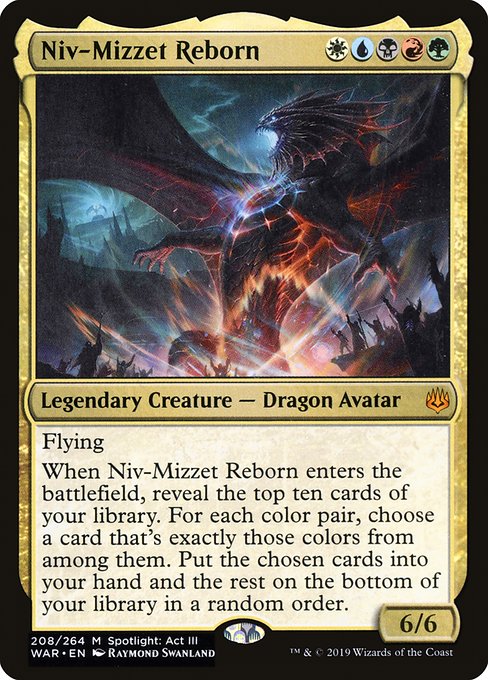
- Commander: Niv-Mizzet Reborn
- Colors: Five-Color
- Archetype: Multicolor value control
- Power tier: mid-high
Cards
Commander
Niv-Mizzet Reborn — Legendary Creature — Dragon Avatar (6/6)
Flying When Niv-Mizzet enters, reveal the top ten cards of your library. For each color pair, choose a card that’s exactly those colors from among them. Put the chosen cards into your hand and the rest on the bottom of your library in a random order.
commander_oracle_ok = true. The scout paraphrase (“digging ten deep for multicolored cards”) is correct in spirit but imprecise: Niv only grabs cards that are exactly two colors (gold), one per guild pair (up to ten cards). Mono-color, colorless, and three-plus-color cards are never picked. That is the single most important deckbuilding constraint here — the engine is only as good as the density of two-color cards in the library.
Gameplan
A grindy five-color control deck whose draw engine is the commander itself. Survive the early game with cheap interaction and fixing, resolve Niv as a 6/6 flier, and refill your hand off the ETB (a realistic 3-6 gold cards per cast). Because Niv recurs from the command zone, every time it dies you get another fistful of gold cards on recast — the table simply cannot out-card a recurring draw-5-to-10. Win by beating down with the evasive 6/6 while spot removal, edicts, counters, and repeatable pingers keep the board clear and protect the clock.
Inevitability: recurring 6/6 flier + a hand that refills 5-10 cards every recast. You never run out of gas; opponents do.
Why this works at common
The whole deck is built to maximize gold density so Niv’s ETB is never a dud:
- All ten guild Signets are exactly-two-color artifacts. They fix the brutal WUBRG cost AND are guaranteed Niv hits — every signet you don’t draw is a card Niv can pull. This is the core trick: your mana rocks double as engine fuel.
- The removal/value suite is deliberately spread across all ten guild pairs (Agony Warp UB, Terminate BR, Izzet Charm UR, Unmake WB, Qasali Pridemage GW, Goblin Legionnaire RW, Branching Bolt RG, Growth Spiral GU, Chronicler of Heroes GW, etc.) so a ten-card reveal usually offers a pick in most pairs.
Role breakdown (counts from the real list)
- Lands: 37
- Any-color fixers (9): Command Tower, Path of Ancestry, Rupture Spire, Transguild Promenade, Crystal Grotto, Shimmering Grotto, Unknown Shores, Crumbling Vestige, Holdout Settlement
- 10 Guildgates + 10 Karoo bouncelands (all ten guilds) — every gold land also nudges fixing
- 8 basics (Plains, 2 Island, 2 Swamp, Mountain, 2 Forest)
- Ramp / fixing rocks & spells: 17 — 10 guild Signets, Prophetic Prism, Commander’s Sphere, Manalith, Wayfarer’s Bauble, plus green fetch-ramp Cultivate / Kodama’s Reach / Farseek. (A large chunk is fixing that doubles as acceleration — the WUBRG cost demands it.)
- Card advantage: 11 — Niv’s ETB (engine), Mulldrifter, Compulsive Research, Sign in Blood, Worldly Counsel, Forbidden Alchemy, Cram Session, Dihada’s Ploy, Pursue the Past, Skyscanner, Chronicler of Heroes / Riptide Crab / Growth Spiral as creature value.
- Spot removal & interaction: 12 — Agony Warp, Terminate, Auger Spree, Izzet Charm, Unmake, Final Payment, Wrecking Ball, Get the Point, Hull Breach, Qasali Pridemage, Branching Bolt, Deny Reality, plus edicts Diabolic Edict / Geth’s Verdict / Cruel Edict and counters Counterspell / Arcane Denial / Dispel / Spell Pierce / Soul Manipulation. Pingers Cuombajj Witches, Vraska’s Finisher, Goblin Legionnaire, Tidehollow Strix mop up small threats.
- Mass / pseudo-wipes: 5 — Drown in Sorrow, Eyeblight Massacre, Fiery Cannonade (one-shot sweepers) plus Crypt Rats and Pestilence (repeatable X-damage board control that also closes games).
Manabase / fixing note
~20 dedicated fixing sources before counting basics: 9 any-color lands + Prophetic Prism + Commander’s Sphere + Manalith + Wayfarer’s Bauble + 3 green ramp spells, on top of 10 dual Gates and 10 Karoos. The Karoos and Gates enter tapped, which is the price of a five-color commons manabase, but Niv is a midgame payoff so the slow lands are acceptable. Note Niv himself needs one of each color — lean on Command Tower, Path of Ancestry, and the any-color lands to make the pip cost on curve, and hold a green ramp spell to fix into it.
Pilot notes
- Mulligan for fixing + an early play. You want all five colors online by turn 5-6 to cast Niv.
- Don’t over-hold counters early — you’re the control deck, but the goal is to land Niv and grind, not to counter everything. Save hard answers for the threats that race your 6/6.
- When Niv resolves, prioritize picking removal and the cheap counters/edicts off the reveal; you’ll redraw card advantage naturally.
- Pestilence and Crypt Rats are your reset buttons AND a backup wincon — both can ping every opponent out if the board stalls.
- Let Niv trade/die freely if it buys value; recasting it is a feature, not a cost (until the commander tax bites — by then you should be far ahead on cards).
Weaknesses
- Tapped-land clunk: 20 of 37 lands enter tapped; the deck is slow out of the gate and vulnerable to fast aggro before Niv comes online.
- Reveal variance: Niv occasionally whiffs to 2-3 cards if you flood on lands/colorless rocks in the reveal — mitigated by the high gold count but never eliminated.
- Commander-dependent: without Niv on the table the card engine is thin (gold cards are individually mediocre commons). Heavy commander hate or repeated exile slows you considerably.
- No true board wipe: the “wipes” are pseudo (-2/-2 sweeps and X-damage), so go-wide tokens or large fatties can slip through; lean on edicts and pingers to compensate.
Decklist
⬇ Download as .txt — paste into Moxfield, Archidekt, or MTG Arena.
Show the full list (99 + commander)
Commander
1 Niv-Mizzet Reborn

Deck
1 Command Tower
1 Path of Ancestry
1 Rupture Spire
1 Transguild Promenade
1 Crystal Grotto
1 Shimmering Grotto
1 Unknown Shores
1 Crumbling Vestige
1 Holdout Settlement
1 Azorius Guildgate
1 Dimir Guildgate
1 Rakdos Guildgate
1 Gruul Guildgate
1 Selesnya Guildgate
1 Orzhov Guildgate
1 Izzet Guildgate
1 Golgari Guildgate
1 Boros Guildgate
1 Simic Guildgate
1 Azorius Chancery
1 Dimir Aqueduct
1 Rakdos Carnarium
1 Gruul Turf
1 Selesnya Sanctuary
1 Orzhov Basilica
1 Izzet Boilerworks
1 Golgari Rot Farm
1 Boros Garrison
1 Simic Growth Chamber
1 Plains
1 Island
1 Swamp
1 Mountain
1 Forest
1 Island
1 Swamp
1 Forest
1 Azorius Signet
1 Dimir Signet
1 Rakdos Signet
1 Gruul Signet
1 Selesnya Signet
1 Orzhov Signet
1 Izzet Signet
1 Golgari Signet
1 Boros Signet
1 Simic Signet
1 Prophetic Prism
1 Commander's Sphere
1 Manalith
1 Cultivate
1 Kodama's Reach
1 Farseek
1 Agony Warp
1 Terminate
1 Auger Spree
1 Izzet Charm
1 Unmake
1 Final Payment
1 Wrecking Ball
1 Get the Point
1 Hull Breach
1 Qasali Pridemage
1 Branching Bolt
1 Deny Reality
1 Tidehollow Strix
1 Goblin Legionnaire
1 Chronicler of Heroes
1 Growth Spiral
1 Riptide Crab
1 Pursue the Past
1 Cram Session
1 Dihada's Ploy
1 Counterspell
1 Arcane Denial
1 Dispel
1 Spell Pierce
1 Diabolic Edict
1 Geth's Verdict
1 Cruel Edict
1 Drown in Sorrow
1 Eyeblight Massacre
1 Fiery Cannonade
1 Crypt Rats
1 Pestilence
1 Mulldrifter
1 Compulsive Research
1 Sign in Blood
1 Worldly Counsel
1 Forbidden Alchemy
1 Cuombajj Witches
1 Vraska's Finisher
1 Skyscanner
1 Wickerbough Elder
1 Soul Manipulation
1 Dimir Guildmage
1 Selesnya Evangel
1 Wild Growth
1 Wayfarer's Bauble